Research and Publications
Research

Glenda Hux, OTD
The Hux Occupation Lab conducts research to support populations experiencing prolonged stress. Our primary focus is on caregivers of children and youth with special healthcare needs.
The lab is directed by Glenda Hux, OTD, OTR/L, IHC, FNAP, assistant professor of occupational therapy. She is a faculty member in the Department of Communication Disorders and Occupational Therapy in the College of Education and Health Professions at the University of Arkansas in partnership with the University of Arkansas for Medical Sciences.
Research and Selected Publications
Hux, G. E., & Schoen, S. A. (2025). Integrative Neural Networks: A Novel Frame of Reference to Support Occupational Engagement in Caregivers. The Open Journal of Occupational Therapy, 13(4), 1-16. https://doi.org/10.15453/2168-6408.2362
Hux, G. E., & Schoen, S. (2025). Integrative Neural Networks Frame of Reference: Application in Practice. The Open Journal of Occupational Therapy, 13(4), 1-12. https://doi.org/10.15453/2168-6408.2466
Hux, G.E., King, N., Schoen, S.A. (2025). Characterizing the lived experiences of parents of CYSHCN ages 0-18. Manuscript in preparation.
Hux, G. (2025). Enhancing social participation for dementia care dyads: A student-led collaborative approach to volunteer engagement and funding in Community Settings. [Research Abstract]. American Journal of Occupational Therapy.
Hux, G. (2025). Impact of classroom behaviors on teacher stress and the role of interprofessional education: Insights from an elementary school in a rural state. [Research Abstract]. American Journal of Occupational Therapy.
Rice, S. & Hux, G. (2025). Impacts of gardening-based interventions on occupational engagement in youth with a history of ACEs. [Research Abstract]. American Journal of Occupational Therapy.
Hux, G., Hart, E., LaRosa, J., Sears, C., Strahan, K. Occupational and health implications of prolonged stress on parents of children and youth with special healthcare needs (CYSHCN): A scoping review. Manuscript in preparation.


Johnny Rider, Ph.D.
The Occupational Performance and Experience Lab (OPEx Lab) directed by John V. Rider, Ph.D., OTR/L, BCPR, BCG, ATP, focuses on understanding how people participate in meaningful life roles while living with chronic conditions, disability and complex health experiences. Grounded in occupational science, interdisciplinary health sciences and rehabilitation research, the lab serves as a centralized research, training and dissemination hub advancing occupation-centered scholarship. OPEx intentionally integrates occupational performance — what people do and how they do it — with occupational experience — how occupations are perceived, valued, and emotionally experienced. The lab emphasizes psychosocial health as a central mechanism influencing participation, adaptation, health and well-being, particularly among individuals living with long-term health conditions. Using both quantitative and qualitative methods, the OPEx lab seeks to identify factors that influence occupational engagement and long-term participation across home and community contexts.
Research and Selected Publications
Rider, J., LaVerdure, A., & Fox, J. (2026). Acceptance and Commitment Therapy in occupational therapy: A scoping review. American Journal of Occupational Therapy. 1-15. https://doi.org/10.1177/19437676261464099
Rider, J., & Allebest, J. (2026). Increasing access to quality health care for the Deaf community: A guide for clinicians. Archives of Physical Medicine and Rehabilitation. https://doi.org/10.1016/j.apmr.2026.03.002
Rider, J., Linford, R., & Lin, W. J. (2026). Shoulder pain in wheelchair rugby athletes: Athlete characteristics, training behaviors, and rehabilitation implications. Assistive Technology, 1-9. https://doi.org/10.1080/10400435.2026.2630939
Rider, J., Honey, A., Pituch, E., O’Mara, V., & McGrath, M. (2025). Accessing support for parenting among parents living with disabilities: A mapping review of qualitative research. Health and Social Care in the Community, 2025(8821639), 1-20. https://doi.org/10.1155/hsc/8821639
Rider, J., & Valdes, K. (2023). Test-retest reliability of joint position sense in the elbow among healthy adults. Journal of Hand Therapy. https://doi.org/10.1016/j.jht.2023.08.015
Rider, J., Longhurst, J., Lekhak, N., Navalta, J., Young, D., & Landers, M. (2022). Psychological factors associated with fear of falling avoidance behavior in Parkinson’s disease: The role of depression, anxiety, and catastrophizing. Journal of Geriatric Psychiatry and Neurology, 36(3), 215-224. https://doi.org/10.1177/08919887221119974
Rider, J., & Tay, M. (2022). Increasing occupational engagement by addressing psychosocial and occupational factors of chronic pain: A case report. The Open Journal of Occupational Therapy. 10(3), 1-12. https://doi.org/10.15453/2168-6408.2027
Rider, J., Longhurst, J., Navalta, J., Young, D., & Landers, M. (2022). Fear of falling avoidance behavior in Parkinson’s disease: Most frequently avoided activities. OTJR: Occupation, Participation and Health, 43(2), 228-236. https://doi.org/10.1177/15394492221106103
OTD Clinical Learning Services and Community Engagement
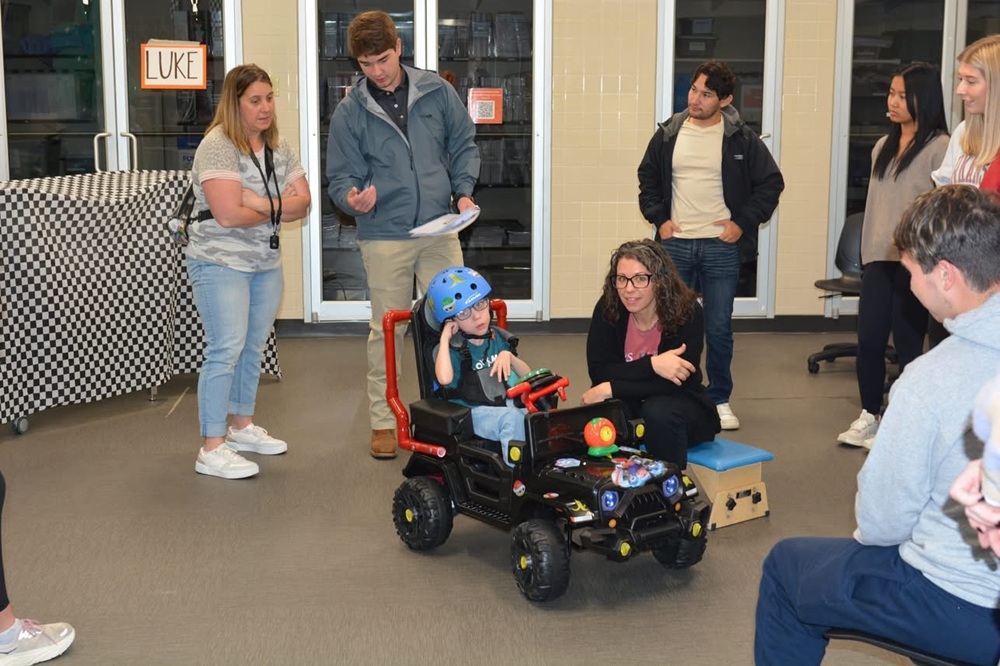
Go Baby Go
Go Baby Go, a collaboration between the University of Arkansas for Medical Sciences and the University of Arkansas, held its first event in October 2024, distributing three cars to families. This year, the project scaled up to provide six cars and is scheduled to hold its “distribution day” event for the families on Saturday, Oct. 17, 2026.
GoBabyGo has formally recognized 25 branches in the United States, with the closest branches to Northwest Arkansas being in Lincoln, Nebraska, and St. Louis. Before 2024, local families seeking GoBabyGo aid were being referred to branches more than 300 miles away.
A key change this year was the restructuring of the student training process. Students, including those from the Biomedical Engineering Student Association, the World Health Organization of Engineering, and Biomedical and Mechanical senior design projects now go through a series of hands-on training stations to learn how to modify the cars.
Go Baby Go Online

North Street Clinic Long COVID Clinic
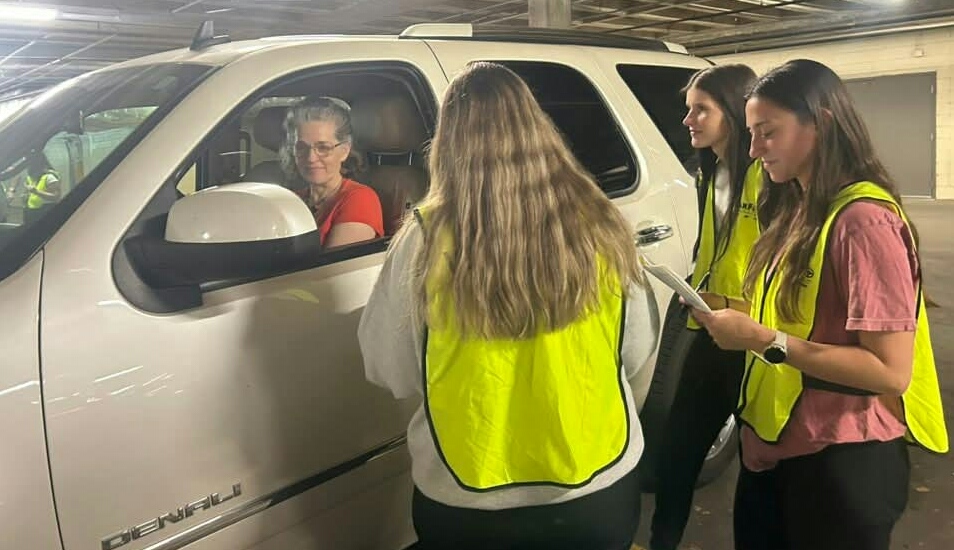
CarFit
CarFit is a community-based educational program created in 2006 in collaboration by AARP and the American Occupational Therapy Association. The program promotes continued safe driving and mobility among older drivers by focusing on safety, comfort, and fit in a driver's personal vehicle.
A proper fit in one's vehicle can greatly increase the safety of the driver and the safety of others. Even though older drivers are often the safest drivers because they are more likely to wear seat belts, and less likely to speed or drive impaired, they are at higher risk for death or serious injury during a crash due to the increased fragility of our bodies as we age. (Source: NHTSA)
Trained CarFit Technician volunteers educate drivers on key areas like mirror adjustments, seat position, steering wheel tilt, and more so the driver can make adjustments to their vehicle to achieve a safer fit. CarFit education is availble at in-person events in many communities, as well as online in virtual and on-demand workshops. Use Find an Event to locate a workshop in your community.